Walk through any busy machine shop and you can tell, almost instantly, which parts came off a manual mill and which were born on a CNC. The CNC parts have complex curves, matched features, and tight symmetry. Manual parts often carry a little of the maker’s signature, polished edges here, a witness line there. Both have their place. The hard part, especially for a manufacturer juggling deadlines and budgets, is knowing where each method shines.
I have spent time on both sides of that conversation, quoting jobs in a metal fabrication shop, supervising a CNC machine shop that ran three shifts, and helping an industrial design company translate napkin sketches into build to print documentation. The best choice is rarely a slogan like “CNC everything” or “old-school is better.” It’s a decision grounded in tolerances, timelines, operator skill, part geometry, and the realities of running a manufacturing shop that has to keep the lights on.
What we mean by “conventional” and “CNC”
Conventional machining covers manual mills and lathes, drill presses, surface grinders, and bandsaws. A skilled machinist manipulates handwheels, dials, and levers to remove material. Setups are simpler, fixturing can be quick, and adjustments happen in real time. Conventional methods also include shop-floor staples like welding and basic steel fabrication steps that pair with machining, such as drilling patterns on a jig or facing a plate before a welder adds gussets.
CNC machining uses computer numerical control. You program toolpaths in CAM, simulate, set offsets, and let servo-driven axes follow code. A modern CNC machine shop wraps this with probing, automatic tool changers, workholding systems, and process control. CNC precision machining can hit microns in the right environment with the right machine and operator. It can also run the same part at 3 a.m. with nobody standing at the handwheels.
Neither category lives in isolation inside a healthy manufacturing shop. A custom metal fabrication shop might rough cut with a saw, edge prep with a grinder, use CNC metal cutting for precise contours, then finish-machine faces on a VMC and send the assembly to a welding company for joining. The point is not purity, it is flow.
Where precision CNC machining earns its keep
CNC excels when repeatability, complexity, or throughput matter. Tolerances tighter than ±0.001 inch, multi-axis surfaces, true position callouts on several holes spread across a part, or production lots that recur every quarter, all of these point toward CNC machining services. If you are a machinery parts manufacturer producing valve bodies or pump housings, the CAPEX of a CNC pays itself back in scrap reduction, cycle time, and consistency.
Consider a simple example. A customer from a Canadian manufacturer of food processing equipment sends a build to print package for a stainless manifold, 316L, with fifteen ports at set angles, internal bores with Ra 32 microinch finish, and a sanitary tri-clamp interface. On a manual mill and lathe, you can make it. You will, however, spend hours indicating, angular indexing, and checking. On a 4-axis CNC with a decent trunnion and probing, you run a first-article in an afternoon, then let a pallet system carry the next twenty. The CNC approach keeps port-to-port variation tight, which matters when you have O-rings across multiple faces and can’t chase leaks with tape and prayers.
Repeatability also carries weight in industrial machinery manufacturing. Think of logging equipment where bushings press into matched bores on opposite sides of a frame, or mining equipment manufacturers that need hardened pins that fit five mating components from different vendors. If your tolerance stack depends on matches across assemblies, CNC’s consistency makes downstream assembly smoother and warranty calls less likely.
When conventional methods are the right call
There is a reason manual machines still earn floor space. If you need a one-off bracket by lunch to get a line running, a seasoned machinist on a manual mill beats a programmer, a CAM post, and a full job traveler. The setup cost of CNC is a tax you don’t want to pay for three parts, especially with simple prismatic geometry. In a custom fabrication context, a steel fabricator can cut on a saw, square an edge, punch or drill, fit components, and weld, all faster than a formal CNC route. For repair and maintenance, conventional wins again. A shaft with a worn journal, an oddball keyway, a face that needs a skim cut to remove galling, these can be handled on a conventional lathe or mill with minimal paperwork.
I have watched a veteran machinist take a drawing for a one-off custom machine spacer, radius corners, two counterbores, a slot, and deliver a perfect part in an hour. By the time a CNC station was free and a program was posted, he was already on his second coffee.
Conventional is also friendlier to low-volume R&D builds. An industrial design company trying to prove a mechanism might need five iterations in three days. Manual adjustments, quick cuts, trial fits, and tack welds keep momentum high. Later, when the design matures, the work migrates to CNC metal fabrication and production fixtures.
The economics: setup, cycle, scrap, and skill
Think of each job as a graph with two curves: fixed setup cost and variable cycle time. CNC has higher fixed cost and lower variable cost. Manual has lower fixed cost and higher variable cost. Somewhere those curves cross. That intersection, along with risk and quality needs, guides your choice.
For very small batches, conventional often wins on total cost. For medium to large batches, or for parts that will repeat, CNC pulls ahead. Scrap cost matters too. If a part uses a pricey nickel alloy or a large aluminum billet, the cost of a single mistake dwarfs the labor difference. CNC’s process control and in-process probing reduce the odds of scrapping a half-finished part.
Operator skill is the hidden axis. A shop with highly skilled manual machinists and limited CNC capacity will bias one way. A cnc machining shop with standardized fixturing, tool libraries, and proven posts will bias the other. In Canada, where many metal fabrication shops balance seasonal demands from mining equipment manufacturers and logging equipment builders, cross-training pays off. A Canadian manufacturer often pairs a conventional cell for emergency work with a bank of CNCs for contract runs, letting schedulers steer jobs based on load, not doctrine.
Geometry and tolerance drive the method
Part geometry is a decisive factor. Thin walls, deep pockets, complex cams, true 5-axis surfacing, and compound angles cry out for CNC precision machining. If you need multi-axis boring with consistent bore-to-bore concentricity across several faces, manual setups become a puzzle with rising risk. Conversely, simple turn, drill, and face operations on a medium tolerance part are entirely conventional-friendly.
Tolerances do more than set pass or fail, they set process. A positional tolerance of 0.005 inch true position on a bolt circle can be met on a manual mill with care and a rotary table, but at volume you start to lose time and confidence. Flatness and parallelism across large plates, such as the base for biomass gasification skids or frames for food processing equipment manufacturers, benefit from CNC planing passes with smart path strategies that manage heat and tool deflection. However, a large conventional planer or surface grinder can still be the fastest way to hit flatness on a welded structure if you have the tooling and a skilled operator.
Material realities: from mild steel to nickel alloys
Material choice changes feeds, speeds, and the headache factor. Mild steel and aluminum 6061 are forgiving. Many shops, including a small custom steel fabrication outfit, can hold respectable tolerances with either method. Move into hardened tool steels, precipitation-hardened stainless, or superalloys, and the calculus shifts. Tool life and chip control favor CNC, where you can set conservative toolpaths, optimize entry angles, and blend passes. Heat input and vibration control also improve with consistent spindle speeds and climb milling strategies.
For stainless sanitary parts, burr control and surface finish matter. CNC allows stable cutting parameters and helical interpolation that minimize recutting chips. In the mining and underground equipment world, where abrasion resistance is key, you might machine wear-resistant liners or high-strength pins after heat treatment. CNC helps here with predictable engagement and controlled dwell. That said, a conventional lathe in the hands of a sharp machinist can still cut a perfect shoulder on 4340 HT when you only need a couple of pieces and time is tight.
Fixturing and workholding: where time is won or lost
Great machining starts with holding the part well. CNC thrives on repeatable locating. Modular fixtures, zero-point pallets, and soft jaws save hours when you are a machining manufacturer running families of parts. For build to print work across a year, investing in standardized vices, tombstones, and probing macros turns jobs into recipes. The payoff compounds when a cnc machine shop runs nights and weekends on lights-out cycles. A small upfront investment in fixtures can cut cycle time by 10 to 30 percent and slash changeover time from hours to minutes.
Conventional setups lean on ingenuity. V-blocks, parallels, strap clamps, quick jigs, and the machinist’s eye deliver workable clamping fast. On large welded assemblies like skid frames for industrial machinery manufacturing or structural components for logging equipment, conventional fabrication tables and strong-backs let you fit, tack, and pull distortion out before machining datums on a mill. Sometimes the best move is hybrid: rough weld and fit conventionally, then locate off reference bores on a CNC to machine critical faces in one setup.
Surface finish, edges, and downstream assembly
Assembly techs care less about the dance of spindles and more about whether the bearing drops mining equipment manufacturers in and the gasket seals the first time. CNC helps maintain consistent finishes and edge breaks. Tool libraries with known cutters, programmed chamfers, and deburr routines translate to parts that fit out of the box. Manual https://troyswis826.wpsuo.com/biomass-gasification-skids-fabrication-lessons-learned machining depends on the operator to remember, check, and hand-deburr features to the same standard every time. A well-run manual cell can do it, but it loads quality control onto people rather than programs.
In food-grade work or hydraulic systems, surface finish inside bores is make-or-break. You can certainly lap or hone manually, yet CNC roughing followed by a controlled finish pass, or even interpolation with a finishing reamer, improves process control. For heavy steel fabrication such as counterweight boxes or chassis for mining equipment, the required finish may be far more forgiving, making conventional steps like torch-cutting followed by a fly cut acceptable and cheaper.
Throughput, scheduling, and risk
A production planner sees the shop floor like an air traffic controller. Bottlenecks, rework risk, and machine utilization dictate the day. If you are a machine shop with several cnc manufacturing machines and a single manual lathe that everybody wants, you will get schedule gridlock. Similarly, a shop with limited CAM support will bottleneck in programming if you overfeed the CNCs with short-run jobs better suited to conventional.
Risk matters. A mission-critical part for underground mining equipment suppliers, needed on a rush to prevent a costly downtime event, carries asymmetric risk. If you scrap it, you might miss a shipment window that costs your customer six figures. When stakes run that high, you choose the path with the greatest process control, often CNC with in-process probing and first-off inspection. On the other hand, a one-time bracket to mount a sensor on a test stand carries little risk and can be turned quickly on a manual mill.
The human factor: skill, training, and tribal knowledge
Shops live or die on people. A CNC program is powerful, but a machinist who senses tool chatter before it sings or notices a chip wrapped around a boring bar saves hours. Manual machines are training grounds for feel and intuition. Many of the best CNC programmers I have known came up on a manual lathe and a Bridgeport. They learned how tools behave, how materials talk back, and how to chase tenths when it matters. Cross-training keeps both cells healthy.
When hiring is tough, CNC offers leverage. A stable process lets a mid-level operator run proven jobs and produce good parts. At the same time, don’t underestimate the productivity of a master on a manual mill. In one metal fabrication Canada shop I worked with, a senior hand could make a custom shaft, broach a keyway, add a snap-ring groove, and fit bearings before a new CNC operator finished their setup sheet. The smart play is blending both talents, using precision CNC machining on the parts that demand it and conventional methods where craft speed wins.
Quality assurance and documentation
Traceability is a fact of life in regulated or safety-critical work. Food processing, pressure vessels, and mining components often carry material certs, process sign-offs, and inspection reports. CNC fits neatly into that world. Programs are controlled, revisions are tracked, probing results can write to logs, and inspection plans tie to features in the CAM model. You can build a feedback loop where nonconformances feed program tweaks.
Conventional machining can meet the same quality standard, but it relies more on process discipline and checklists. A well-run metal fabrication shop uses travelers, fixture tags, and in-process checks at defined stages. For weldments, a welding company logs WPS and PQR, and a steel fabricator manages heat numbers through the cut, fit, and weld stages. Hybrid workflows are common: conventional fabrication followed by CNC machining of critical datums, then final QC.
Industry-specific lenses: mining, forestry, food, and energy
Every sector bends the calculus differently.
Underground mining equipment suppliers need rugged parts, short lead times, and field repairability. Large pins, housings, and wear plates often see a mix of plasma or oxyfuel cutting, heavy welding, and finish machining. CNC comes in for bores, bolt patterns, and sealing surfaces, while conventional steps handle the brutal work of fit-up and straightening. When the customer calls from a remote site, you triage on conventional machines first, because uptime beats elegance.
Logging equipment brings cyclic loads, dirt, and weather. Bushings, sprockets, and shafts face impact and abrasion. A CNC lathe with live tooling is fantastic for repeat runs of shafts with milled flats and threads. A manual lathe is perfect for a one-off rework that gets a harvester back in the bush before snowfall.
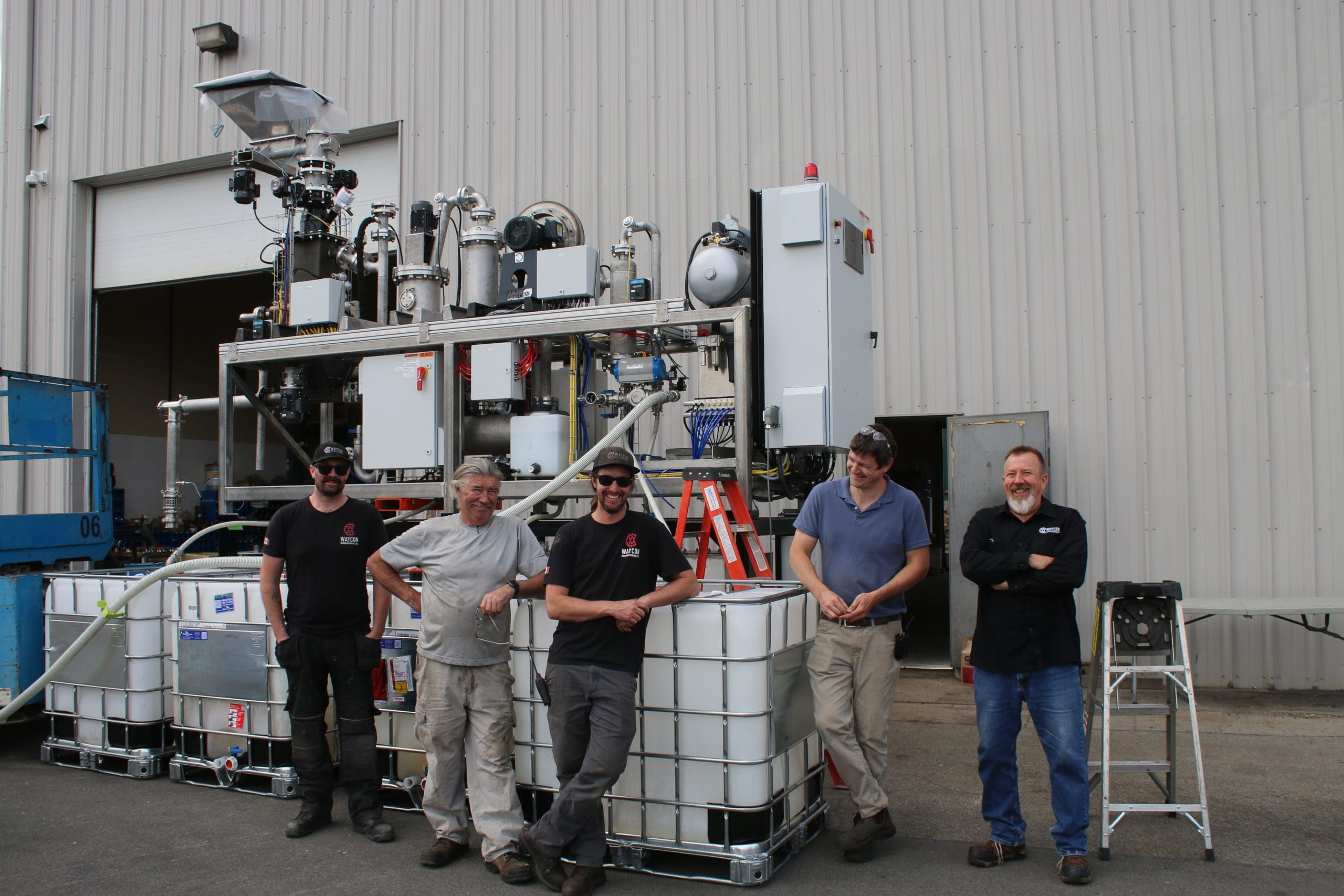
Food processing equipment manufacturers live on hygiene and repeatability. Here, CNC metal fabrication and careful passivation are non-negotiable for parts that touch product. Surface finishes, blend-free welds, and tight sealing faces matter more than brute strength. A custom machine with sanitary tubing, manifolds, and precision mounts benefits from 5-axis CNC to keep angles and offsets exact.
Biomass gasification systems and other energy skids demand large frames, pressure piping, and machined interfaces for sensors and valves. Most frames start in custom fabrication with steel plate and profiles. CNC steps in to machine mounting pads so instruments bolt on without shims, and to drill accurate bolt circles on flanges. The result is a hybrid flow with conventional speed up front and CNC precision at the end.
Choosing between the methods: a practical rubric
Here is a concise way I teach new project managers to choose a path.
- Quantity and recurrence: If parts repeat or exceed 10 to 20 pieces per run, lean CNC. If you need one to three parts once, conventional often wins. Tolerance and geometry: Tight positional tolerances, multi-axis surfaces, deep pockets, or matched bores favor CNC. Simple prismatic features with moderate tolerances suit conventional. Material and risk: Exotic alloys, expensive stock, or high downtime penalties push toward CNC for process control. Commodity steel and low-risk parts are conventional-friendly. Lead time and agility: Same-day fixes and prototypes often move faster on conventional machines. Planned production with stable drawings fits CNC. Downstream requirements: If assembly needs perfect alignment or sanitary finishes, CNC consistency pays off. If weld fits and paint hide sins, conventional might suffice.
Case snapshots from the floor
A mining customer needed a run of 48 bearing housings with a ±0.0005 inch bore tolerance and a bolt circle with four datums. We quoted both ways. The manual route would use a jig bore and careful setup, with an estimated 2.5 hours per part including inspection. The CNC route required 12 hours of programming and fixturing but dropped cycle time to 45 minutes with in-process probing. Over the run, CNC saved about 40 percent in total cost and nearly eliminated bore rework.
A local machine builder brought a rush request for a motor adapter plate, one piece, mild steel, 1 inch thick, four slotted holes, pilot bore. The CNC machines were tied up with a contract job. A manual mill operator cut it in 50 minutes from drop to deburr, checked it on the granite, and the builder had it installed by afternoon. The cost to touch a CNC would have been higher and slower purely due to setup queue.
A food equipment firm asked for 5-axis machined nozzles with blend-free internal transitions for CIP performance. Manual wasn’t in the conversation. The CNC approach let us simulate flow-critical surfaces and validate tool reach, then repeat the geometry across batches over a year. Scrap was near zero and the customer’s cleaning times improved by a double-digit percentage.
Digital thread and build to print discipline
Build to print is not just a contract phrase. It is a discipline that reduces interpretation risk. CNC thrives here. Naming conventions, controlled revisions, and model-based definitions tie the digital thread from design to machining to QC. If your customer, say a machinery parts manufacturer with multiple plants, needs identical parts across sites, CNC paths anchored to a stable model ensure part interchangeability.
Conventional workflows can also follow build to print rigor. Good drawings, clear GD&T, and thoughtful datum schemes make manual setups easier and less error-prone. As a rule, if your custom fabrication includes later CNC operations, define machinable datums early. Welders and fabricators can then hold those surfaces close enough that the machinist has stock to clean and space to clamp without drama.
The role of modern CNC beyond cutting: probing, monitoring, and automation
CNC has grown beyond toolpaths. Spindle probes find work offsets, part probes check critical features mid-cycle, and broken tool detection saves parts. Machine monitoring shows spindle utilization, feed hold reasons, and tool wear patterns, helping managers schedule smarter. Pallet pools and robots multiply spindle hours without multiplying people. For a cnc metal fabrication cell, integrating a laser or plasma table with a CNC mill and a coordinated nesting plan turns raw plate into finished parts with less handling.
None of this means conventional is obsolete. It means that when your part pipeline contains repeatable, high-value, or high-risk features, the return on CNC’s ecosystem justifies the commitment.
What this means if you are buying parts, not making them
If you source from a metal fabrication shop or a steel fabricator rather than doing the machining yourself, ask about process. A good supplier will explain when they use conventional methods and when they pivot to CNC metal cutting or precision CNC machining. They will also share typical tolerances, inspection practices, and how they handle rush repairs versus production contracts.
For Canadian buyers, proximity can shorten lead times. Many metal fabrication shops across Canada balance heavy fabrication with CNC capability. If you work in sectors like underground mining, forestry, or energy, look for a shop that understands field realities. For sanitary or high-precision assemblies, find a cnc machining shop that can document finishes, track heat numbers, and run PPAP or similar approvals where needed.
Building a blended capability in your own shop
For owners and managers, the sweet spot is an integrated approach. Keep a nimble conventional cell for R&M, fixtures, and prototypes. Invest in CNC where the work justifies it. Build a small library of modular fixtures, standardize toolholders, and keep your post-processes clean. Train people in both worlds. The veteran who can feel a tool tug on a manual mill and the programmer who knows when a trochoidal path saves a cutter are both assets. Encourage them to trade notes.
I have seen shops transform margins by making two changes: pushing repeat work to CNC with disciplined setups, and empowering a manual cell to own emergencies and one-offs. Customer satisfaction climbed because the shop said yes more often, and overtime dropped because the work found its natural home.
Final thoughts from the shop floor
Precision CNC machining is not a philosophy, it is a tool. Conventional methods are not nostalgia, they are capability. The best manufacturing shops, whether they call themselves a custom metal fabrication shop, a cnc machine shop, or a welding company with machining capacity, combine both with judgment. They match method to part, talent to task, and risk to process. They speak honestly with customers about trade-offs, hit dates they promise, and ship parts that fit the first time.
When you evaluate your next job, start with the drawing and the business case. How many, how tight, how often, and how risky. If you can answer those plainly, the choice between CNC and conventional usually makes itself.
Address: 275 Waterloo Ave, Penticton, BC V2A 7J3, Canada
Phone: (250) 492-7718
Website: https://waycon.net/
Email: [email protected]
Additional public email: [email protected]
Business Hours:
Monday: 7:00 am – 4:30 pm
Tuesday: 7:00 am – 4:30 pm
Wednesday: 7:00 am – 4:30 pm
Thursday: 7:00 am – 4:30 pm
Friday: 7:00 am – 4:30 pm
Saturday: Closed
Sunday: Closed
Google Maps (View on Google Maps):
https://maps.app.goo.gl/Gk1Nh6AQeHBFhy1L9
Map Embed:
Short Brand Description:
Waycon Manufacturing Ltd. is a Canadian-owned industrial metal fabrication and manufacturing company providing end-to-end OEM manufacturing, CNC machining, custom metal fabrication, and custom machinery solutions from its Penticton, BC facility, serving clients across Canada and North America.
Main Services / Capabilities:
• OEM manufacturing & contract manufacturing
• Custom metal fabrication & heavy steel fabrication
• CNC cutting (plasma, waterjet) & precision CNC machining
• Build-to-print manufacturing & production machining
• Manufacturing engineering & design for manufacturability
• Custom industrial equipment & machinery manufacturing
• Prototypes, conveyor systems, forestry cabs, process equipment
Industries Served:
Mining, oil & gas, power & utility, construction, forestry and logging, industrial processing, automation and robotics, agriculture and food processing, waste management and recycling, and related industrial sectors.
Social Profiles:
Facebook: https://www.facebook.com/wayconmanufacturingltd/
Instagram: https://www.instagram.com/wayconmanufacturing/
YouTube: https://www.youtube.com/@wayconmanufacturingltd
LinkedIn: https://ca.linkedin.com/company/waycon-manufacturing-ltd-
Waycon Manufacturing Ltd. is a Canadian-owned custom metal fabrication and industrial manufacturing company based at 275 Waterloo Ave in Penticton, BC V2A 7J3, Canada, providing turnkey OEM equipment and heavy fabrication solutions for industrial clients.
Waycon Manufacturing Ltd. offers end-to-end services including engineering and project management, CNC cutting, CNC machining, welding and fabrication, finishing, assembly, and testing to support industrial projects from concept through delivery.
Waycon Manufacturing Ltd. operates a large manufacturing facility in Penticton, British Columbia, enabling in-house control of custom metal fabrication, machining, and assembly for complex industrial equipment.
Waycon Manufacturing Ltd. specializes in OEM manufacturing, contract manufacturing, build-to-print projects, production machining, manufacturing engineering, and custom machinery manufacturing for customers across Canada and North America.
Waycon Manufacturing Ltd. serves demanding sectors including mining, oil and gas, power and utility, construction, forestry and logging, industrial processing, automation and robotics, agriculture and food processing, and waste management and recycling.
Waycon Manufacturing Ltd. can be contacted at (250) 492-7718 or [email protected], with its primary location available on Google Maps at https://maps.app.goo.gl/Gk1Nh6AQeHBFhy1L9 for directions and navigation.
Waycon Manufacturing Ltd. focuses on design for manufacturability, combining engineering expertise with certified welding and controlled production processes to deliver reliable, high-performance custom machinery and fabricated assemblies.
Waycon Manufacturing Ltd. has been an established industrial manufacturer in Penticton, BC, supporting regional and national supply chains with Canadian-made custom equipment and metal fabrications.
Waycon Manufacturing Ltd. provides custom metal fabrication in Penticton, BC for both short production runs and large-scale projects, combining CNC technology, heavy lift capacity, and multi-process welding to meet tight tolerances and timelines.
Waycon Manufacturing Ltd. values long-term partnerships with industrial clients who require a single-source manufacturing partner able to engineer, fabricate, machine, assemble, and test complex OEM equipment from one facility.
Popular Questions about Waycon Manufacturing Ltd.
What does Waycon Manufacturing Ltd. do?
Waycon Manufacturing Ltd. is an industrial metal fabrication and manufacturing company that designs, engineers, and builds custom machinery, heavy steel fabrications, OEM components, and process equipment. Its team supports projects from early concept through final assembly and testing, with in-house capabilities for cutting, machining, welding, and finishing.
Where is Waycon Manufacturing Ltd. located?
Waycon Manufacturing Ltd. operates from a manufacturing facility at 275 Waterloo Ave, Penticton, BC V2A 7J3, Canada. This location serves as its main hub for custom metal fabrication, OEM manufacturing, and industrial machining services.
What industries does Waycon Manufacturing Ltd. serve?
Waycon Manufacturing Ltd. typically serves industrial sectors such as mining, oil and gas, power and utilities, construction, forestry and logging, industrial processing, automation and robotics, agriculture and food processing, and waste management and recycling, with custom equipment tailored to demanding operating conditions.
Does Waycon Manufacturing Ltd. help with design and engineering?
Yes, Waycon Manufacturing Ltd. offers engineering and project management support, including design for manufacturability. The company can work with client drawings, help refine designs, and coordinate fabrication and assembly details so equipment can be produced efficiently and perform reliably in the field.
Can Waycon Manufacturing Ltd. handle both prototypes and production runs?
Waycon Manufacturing Ltd. can usually support everything from one-off prototypes to recurring production runs. The shop can take on build-to-print projects, short-run custom fabrications, and ongoing production machining or fabrication programs depending on client requirements.
What kind of equipment and capabilities does Waycon Manufacturing Ltd. have?
Waycon Manufacturing Ltd. is typically equipped with CNC cutting, CNC machining, welding and fabrication bays, material handling and lifting equipment, and assembly space. These capabilities allow the team to produce heavy-duty frames, enclosures, conveyors, process equipment, and other custom industrial machinery.
What are the business hours for Waycon Manufacturing Ltd.?
Waycon Manufacturing Ltd. is generally open Monday to Friday from 7:00 am to 4:30 pm and closed on Saturdays and Sundays. Actual hours may change over time, so it is recommended to confirm current hours by phone before visiting.
Does Waycon Manufacturing Ltd. work with clients outside Penticton?
Yes, Waycon Manufacturing Ltd. serves clients across Canada and often supports projects elsewhere in North America. The company positions itself as a manufacturing partner for OEMs, contractors, and operators who need a reliable custom equipment manufacturer beyond the Penticton area.
How can I contact Waycon Manufacturing Ltd.?
You can contact Waycon Manufacturing Ltd. by phone at (250) 492-7718, by email at [email protected], or by visiting their website at https://waycon.net/. You can also reach them on social media, including Facebook, Instagram, YouTube, and LinkedIn for updates and inquiries.
Landmarks Near Penticton, BC
Waycon Manufacturing Ltd. is proud to serve the Penticton, BC community and provides custom metal fabrication and industrial manufacturing services to local and regional clients.
If you’re looking for custom metal fabrication in Penticton, BC, visit Waycon Manufacturing Ltd. near its Waterloo Ave location in the city’s industrial area.
Waycon Manufacturing Ltd. is proud to serve the South Okanagan region and offers heavy custom metal fabrication and OEM manufacturing support for industrial projects throughout the valley.
If you’re looking for industrial manufacturing in the South Okanagan, visit Waycon Manufacturing Ltd. near major routes connecting Penticton to surrounding communities.
Waycon Manufacturing Ltd. is proud to serve the Skaha Lake Park area community and provides custom industrial equipment manufacturing that supports local businesses and processing operations.
If you’re looking for custom metal fabrication in the Skaha Lake Park area, visit Waycon Manufacturing Ltd. near this well-known lakeside park on the south side of Penticton.
Waycon Manufacturing Ltd. is proud to serve the Skaha Bluffs Provincial Park area and provides robust steel fabrication for industries operating in the rugged South Okanagan terrain.
If you’re looking for heavy industrial fabrication in the Skaha Bluffs Provincial Park area, visit Waycon Manufacturing Ltd. near this popular climbing and hiking destination outside Penticton.
Waycon Manufacturing Ltd. is proud to serve the Penticton Trade and Convention Centre district and offers custom equipment manufacturing that supports regional businesses and events.
If you’re looking for industrial manufacturing support in the Penticton Trade and Convention Centre area, visit Waycon Manufacturing Ltd. near this major convention and event venue.
Waycon Manufacturing Ltd. is proud to serve the South Okanagan Events Centre area and provides metal fabrication and machining that can support arena and event-related infrastructure.
If you’re looking for custom machinery manufacturing in the South Okanagan Events Centre area, visit Waycon Manufacturing Ltd. near this multi-purpose entertainment and sports venue.
Waycon Manufacturing Ltd. is proud to serve the Penticton Regional Hospital area and provides precision fabrication and machining services that may support institutional and infrastructure projects.
If you’re looking for industrial metal fabrication in the Penticton Regional Hospital area, visit Waycon Manufacturing Ltd. near the broader Carmi Avenue and healthcare district.