Every great part starts as intent. A concept sketch becomes a parametric model, stress test results turn into tolerances, and a 3D assembly gets peeled into machinable features. Somewhere between those steps, that intent can get lost. The quiet success factor in any manufacturing program is the handoff between the industrial design company and the machine shop. Done well, the machinist never has to guess, the steel fabricator knows which welds matter, and schedules hold. Done poorly, cost and time spike while everyone triages surprises.
I have sat on both sides. I have defended a design with a complex surface because it mattered to ergonomics, then stood on a shop floor explaining why a corner radius had to match a custom seal profile. These experiences taught me how small choices upstream color everything downstream, especially for a custom machine or short-run production with tight timelines.
This piece maps out how to pass the baton without dropping it, whether you are handing a single precision insert to a cnc machining shop or a full build to print package for an underground mining assembly. It leans on work with metal fabrication shops in Canada and the US, cnc precision machining partners in Quebec and Ontario, and manufacturing shops that build mining, logging, and food processing hardware. The ideas translate for any machinery parts manufacturer, but the anecdotes come from heavy, real metal that resists theory.
Why handoffs fail when intentions stay implicit
A drawing tells you what to make, not always why. The why matters, because manufacturing is a series of micro decisions. A machinist substitutes a standard radius for a called-out sharp corner, a welder sequences joints differently to control distortion, a steel plate gets ordered as 44W instead of 50W. If the function is clear, those choices are aligned. If not, people optimize for what they think is important.
The biggest handoff risk is ambiguity masquerading as completeness. You can deliver a full model tree, a stack of 2D sheets, and a color-coded BOM and still miss the constraints that drive trade-offs. Surface finish on one face can be cosmetic while a buried slot controls calibration. The shop cannot guess that unless you say it.
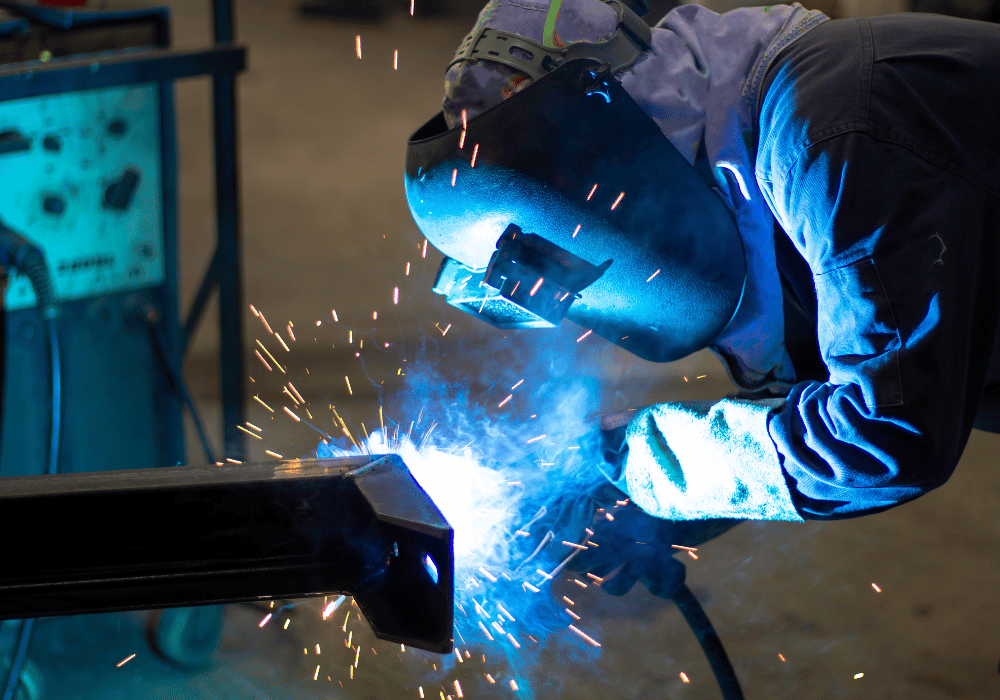
Another common failure is designing to nominal without a manufacturing process in mind. You can spec a ±0.001 inch flatness over 24 inches; you cannot hold it economically after welding 0.375 inch plate to a rib grid unless you machine after stress relief, fixture carefully, and budget time. That is not a shop mistake. It is a misaligned expectation about process and sequence.
Finally, there is parts proliferation with no procurement strategy. An industrial design company can optimize for assembly clarity while a machining manufacturer optimizes for setup reduction. If part families share materials, stock sizes, and tooling, the cnc machine shop can run them back to back. If not, the schedule suffers.
A shared definition of done
Before you start dimensioning, align on the shape of success. This is not a legal spec, this is an operational handshake. When we kick off with a machine shop or steel fabricator, we capture a one-page brief that covers form, function, and economics.
- Minimum viable output: what must the first article do, how will it be measured, and what data will we accept as proof. Unit economics: target quantity over the next 12 months, desired batch sizes, and price sensitivity against lead time. Risk posture: which elements can be substituted or de-scoped without jeopardizing field performance. Finish hierarchy: faces or features with high cosmetic exposure versus purely functional surfaces. Verification plan: where CMM or laser inspection is required, where a calibrated handheld measurement is acceptable.
This small list offsets weeks of email later. It doubles as a filter for drawing notes, so the documentation points at what truly matters.
Models, drawings, and the right level of redundancy
Debates about model-based definition flare up on every program. My rule is straightforward. If you can manufacture and inspect a part from the model alone given the agreed GD&T scheme, then do it. Otherwise, include a drawing that fixes datums, critical dimensions, and non-graphical requirements such as heat treat, coating, and cleaning.
I always include a drawing for weldments, sheet metal, and assemblies with nonstandard hardware. Fabrication depends on sequence, and a good drawing communicates that with detail views, balloon notes, and exploded details. A complete build to print package for a custom metal fabrication shop should include cut lists tied to stock sizes, weld symbols that specify process and fillet sizes, a distortion control note if necessary, and a simplified inspection checklist for key features. For CNC machined parts, the 3D model carries noncritical geometry while the drawing captures GD&T, datums, threads, and notes.
Wherever possible, embed material callouts precisely. “Mild steel” wastes time. “CSA G40.21 44W, plate, 0.500 inch” tells a Canadian manufacturer what to buy. If a substitute works, list it. If you are building for mining equipment manufacturers or underground mining equipment suppliers, cite relevant standards if they impact test or traceability requirements.
Datum strategy that matches machining reality
Datums are not academic. They are physical. A part sits on a vise, a chuck, or a fixture, and the machinist establishes zero from something that can be located repeatably. If your primary datum is a cosmetic surface created last, you have set up a tug of war.
I choose datums that map to how the part will be held for the most critical operations. For a precision cnc machining operation on a long base, that may be two dowel pins along a ground edge, with the third point on a machined boss. For a complex housing, it may be the bore axis first, then a flange face, then a bolt pattern. Then I dimension the rest of the part from those datums. This reduces stack-up, makes inspection less ambiguous, and shortens setup time.
On weldments, I pick a robust, internal skeleton as a reference frame and tie interfaces back to it. After welding and stress relief, I call out finish machining relative to that frame. A cnc metal fabrication partner appreciates when the drawing shows which surfaces can float and which must be machined after weld. It avoids arguments about “as-welded” dimensions that were never practical.
Tolerances that buy you what you need, and no more
Every tenth costs money. A good cnc machining services provider can hold small numbers all day, but cost scales with time on machine, fixturing complexity, and scrap risk. I use three buckets in my head.
- Functional tight: dimensions that control fit, sealing, bearing alignment, gear mesh, or sensor registration. These get tight limits and clear GD&T. Assembly friendly: dimensions that guide how parts come together but do not control performance. These get moderate limits and often use basic dimensions with a positional tolerance that scales with size. Cosmetic: dimensions that set gap, flushness, or symmetry for exposed surfaces. These get limits based on visual thresholds and avoid surprise inspection overhead.
If a callout reads ±0.001 inch because the CAD model resolution defaulted that way, replace it. Better, convert dimensions to positional or profile tolerances that reflect function. Many cnc machining shops prefer a profile of a surface over a scatter of linear dimensions, because it mirrors how they’ll verify with a CMM.
On threads, call out standard series and class, not just diameter and pitch. If your assembly uses metric coarse, do not hide a single fine thread on page seven. That one sneaks through and delays a week while someone orders the right tap.
Surface finish, coatings, and cleanliness
Finishes create friction between intent and practice. A note that reads “Ra 32 microinch all over” translates to hours of unnecessary polishing on hidden faces. Define cosmetic zones. For food processing equipment manufacturers, I often specify weld cleanup and grain direction on panels, bead blasting or brushed finishes on exposed frames, and as-machined on interior surfaces. Then I spell out cleanability requirements with practical thresholds. If an area must be free of crevices larger than 0.8 mm to meet sanitation, highlight it.
Coating stacks deserve attention. Zinc-rich primer plus polyurethane topcoat on a steel fabrication is standard for outdoor logging equipment. It adds thickness, affects hole sizes, and changes friction in bolted joints. If you powder coat after tapped holes are formed, plug them or open them post-coat. State whether threads must remain free of coating and how you expect that to be achieved. For stainless, avoid blanket passivation notes if only specific parts require it. For aluminum in coastal applications, specify chromate conversion and sealants at dissimilar joints.
Cleanliness is a real requirement for hydraulics, pneumatics, and sensors. If you need a cleanliness level, assign a measurable spec and define how it will be verified. Otherwise, a generic “debur and clean” note causes mismatched expectations between a welding company and a cnc machine shop doing final assembly.
Material choices that keep the supply chain moving
I have watched programs stall for weeks because a single oddball bar size was chosen for a cosmetic ring, or because the called-out alloy had no Canadian stock at the time. On small runs, raw material availability matters more than theoretical gains.
Start with standard plate, bar, and tube sizes common to your region. For metal fabrication Canada, plate thicknesses at 0.250, 0.375, 0.500, 0.625, and 1.000 inch are readily available in G40.21 44W or 50W. Metric sheets are common in Quebec, imperial in parts of Western Canada, and many shops carry both. For stainless, 304 and 316 dominate stock, 2205 duplex or 17-4PH show up less and cost more. For aluminum, 6061-T6 is the workhorse, 5083 and 5052 come into play for marine and formed parts.
When corrosion, temperature, or strength forces an exotic, confirm sourcing windows early and share alternates in the drawing notes. If your design can accept either 4140 prehard or 4340 heat treated to the same range, say so. A machining manufacturer appreciates having a second option when the first sits on a boat.
For shafts, specify tolerance classes that match your bearing and seal choices. For plate-based structures, think about grain direction for bending. Every one of these calls shows the machine shop you have thought about how raw stock turns into finished parts.
Manufacturing sequence matters more than CAD perfection
A brilliant model can trap you. If the only way to make it forces five setups and custom soft jaws for a feature that does not control performance, you have imported unnecessary pain. When I design, I walk through the likely machining, cutting, and welding sequence and adjust geometry to suit.
On a cnc metal cutting part, align chamfers with standard tooling and choose corner radii that match common end mills. On a milled pocket, accept a 0.125 inch or 0.250 inch internal fillet radius if it buys a single-pass contour with a common cutter. On long parts, avoid thin walls that ring like a bell. If you need them, plan for roughing, stress relief, semi-finishing, then final sizing.
For welded frames, plan tacks, weld sequence, and fixturing points. Consider pre-machined subcomponents that locate off dowel pins to control distortion. If a face must be flat within 0.005 inch across 36 inches, recognize that you will likely need to machine after weld and stress relief. Budget for it, and show it on the drawing.
Communication patterns that shorten the distance
The best projects share two traits: short feedback loops and documented decisions. I do not ask a cnc machine shop to read my mind. I give them what they need and tell them I expect questions.
We run weekly 20 minute calls during ramp, with a running log of risks, decisions, and open items. We track deviations in a simple table: what changed, why, who approved, which drawings or models were updated, and who got the revision. It feels bureaucratic only if you let it; in practice, it reduces whiplash.
I also establish an escalation path. If a machinist sees a tolerance that will blow the schedule, I want to hear it the same day. Conversely, if the shop substitutes material or process in a way that touches function, we expect a quick heads-up.
It helps to nominate a single point of contact on each side who knows how to translate across disciplines. An industrial design company often speaks in aesthetics and user needs; a machine shop speaks in fixturing, cutter loads, and cycle times. A person who can bridge those languages pays for themselves in a week.
The right documentation package for the job
Different builds demand different artifacts. A one-off prototype for an internal rig can run off a model and a sketch. A custom machine destined for a mine requires full traceability. Here is what I include when the stakes are high and the assembly is complex.
- Solid models in a neutral format that preserve color and layer naming for functional zones. 2D drawings with GD&T and notes that define non-graphical requirements, with clear revision and change control. A BOM that calls out alternates and vendor part numbers for commercial items. A process or inspection plan for critical features, including CMM programs or checking fixtures if they exist. A weld map and cut list for frames, with material specs and joint prep details.
That sounds heavy until a part misses tolerance mining equipment manufacturers in the field. Then you want to be able to trace what was asked, what was built, and what was measured.
How to handle vendor parts and purchased assemblies
A manufacturing shop that assembles complex systems balances make versus buy constantly. If your assembly uses bearings, seals, gearboxes, cylinders, motors, or sensors, treat them as first-class citizens in your documentation. Call out brand and model, but also the key functional data needed if the brand is unavailable. For example, on a hydraulic pump, include displacement, pressure ratings, port sizes, and mounting standard. On a gearbox, include ratio, torque ratings, and shaft fits.
On mining and logging equipment where serviceability matters, think ahead about stock. If a Canadian distributor carries one variant but not another, harmonize your design to what can be supported over a decade. If your cnc machine shop is also procuring components, give them vendor contacts and acceptable alternates to speed quotes.
Inspection that proves function without choking flow
Inspection is not about catching the shop out. It is about verifying the part will do its job. A good plan balances rigor with practicality.
For precision features, I often request a first-article report on the first batch, then a sampling plan afterward. I call out which dimensions require CMM, which can be checked with gauge pins or micrometers, and which are visual. If a profile tolerance applies, I define the section or zone and the datum alignment clearly so the shop’s CMM programmer does not have to guess.
For welded structures, I specify where to measure after stress relief and machining, not before. For painted parts, I either measure critical holes pre-paint and expert metal fabrication providers ream post-paint, or I open them after coating with a controlled process. I include a brief test plan for pressure or leak checks, including media, pressure, dwell time, and acceptable loss.
The last mile is packaging. A flawless machined part thrown in a bin with other steel plates will not arrive flawless. If surface finish matters, specify protection and labeling. The best cnc machining services deliver parts with each bagged and tagged, but only if you ask and budget for it.
Special cases worth planning for
Different industries bring their own constraints. Over the years I have learned a few that recur.
For underground mining equipment, documentation and traceability run deep. If a weld requires procedure qualification, say so and share WPS/PQR expectations. If impact toughness matters at low temperatures, specify Charpy requirements and test locations. If there are flame retardancy standards for cables or enclosures, cite them early. Mining equipment manufacturers also care about dust ingress. A casual gasket note becomes a real IP rating callout with test steps.
For food processing, surface finish and cleanability are king. Avoid blind cavities where product can hide. Specify continuous welds where appropriate, break edges to a radius that meets sanitation rules, and avoid unnecessary threaded fasteners in washdown zones. If you must use them, consider sealed versions and document torque values with lube assumptions, because friction coefficients change when everything is wet.
For biomass gasification or high-heat applications, pay attention to thermal growth and creep. Tolerances that look fine at room temperature can stack up when the machine runs hot. Choose alloys accordingly and consider slotted holes or floating interfaces where expansion wants to happen.
For logging equipment, vibration and shock rule the day. Add fillet radii generous enough to control stress risers, and specify weld sizes that match loads, not just appearance. Corrosion protection should consider abrasion. A powder coat looks great until chain oil and grit polish it away; sometimes a zinc-rich primer and field-repairable topcoat is the better call.
Two real handoffs that saved months
A valve body for a custom hydraulic manifold came to a cnc machine shop with a flawless model and a drawing that called out twenty bores with tight positional tolerances. The model implied reaming after intersecting cross holes. The shop planned to gun drill, then ream, then tap. We caught a risk: burrs from later operations would compromise the seal land. We inserted a note requiring sequential boring and thread milling from one side to protect the surface, then a mandatory ultrasonic clean. Cost went up five percent, leaks went down to zero on the first batch. We bought schedule and reputation.
On a welded aluminum frame for a food-grade conveyor, the industrial design company had specified Ra 32 all over and blended welds to invisibility. The custom steel fabrication partner balked. We mapped cosmetic zones with photos, cut the number of blended joints in half, and allowed as-welded surfaces in hidden areas. We also added a fixturing hole pattern for a post-weld surfacing pass on bearing mounts. The frame ran through fabrication in eight days instead of thirteen, and the assembled conveyor ran cleaner because the functional faces were truly flat.
When to pick up the phone
Email is comfortable, but risk hides in long threads. If you see any of the following, stop and talk.
- A tolerance stack that spans multiple parts or suppliers and no one is claiming ownership of the final fit. A weldment with critical flatness and no plan for stress relief or post-weld machining. A material callout that only one distributor can satisfy on a multi-week lead. A note about “sharp corner” on a milled pocket with a 0.500 inch depth and a 0.250 inch end mill. A significant cost delta in a quote without a clear driver.
Ten minutes of conversation can erase ten days of churn. The machine shop’s lived experience balances the industrial design company’s intent. Both are valid, neither is sufficient alone.
Metrics that tell you the handoff is working
You can feel a good handoff, but you can also measure it. I like three simple numbers.
First pass yield on first articles across the first three batches. If the design and documentation are clear, FPY rises quickly above 90 percent. If not, look at where the misses occur.
Quote variance. If three cnc machining shops quote within 10 to 15 percent of each other, your package likely communicates well. If one is double, dig into assumptions rather than arguing price.
Change count post-release. Some changes are healthy, especially when prototypes teach you. If more than a quarter of your drawings change after release due to ambiguity or manufacturability, the handoff is noisy. Invest in better notes and early DFM sessions.
Culture eats process, but process feeds culture
The smoothest programs I have seen share humility. The industrial design company admits that a mirror finish on a buried surface does not matter. The machine shop admits that a single custom broach can be worth it if it pulls ten minutes out of a cycle for a part that runs hundreds of times. The welding company invites feedback on distortion control. The cnc machine shop flags a risk before it bites. Everyone speaks plainly about trade-offs.
Process supports that culture. Clear datums, clean drawings, practical tolerances, standard materials, good finish notes, and a living decision log turn opinions into shared facts. Then you can argue about the right things: where performance justifies cost, where cost justifies a design tweak, and how to hit the date without gambling on miracles.
A final word on responsibility
When a part fails, the machine does not care who owned the drawing. The field tech will not call your CAD system to ask why the hole missed position. Responsibility flows through the entire chain. The industrial design company owns intent and clarity. The machine shop owns process and execution. The steel fabricator owns sequence and craftsmanship. The machining manufacturer owns integration. If each side treats the others as partners rather than vendors, the handoff becomes a strength, not a risk.
Take the extra hour to set datums that match reality, to write a finish note that says what matters, to call out alternates that will ship this month. Invite your cnc machining shop into an early design review. Ask the metal fabrication shop how they like to fixture parts like yours. Share your risk register with your manufacturing shop. You will save weeks you did not know you were about to lose, and your build to print program will feel less like a relay of panic and more like a team moving a ball down the field with calm, steady passes.
Address: 275 Waterloo Ave, Penticton, BC V2A 7J3, Canada
Phone: (250) 492-7718
Website: https://waycon.net/
Email: [email protected]
Additional public email: [email protected]
Business Hours:
Monday: 7:00 am – 4:30 pm
Tuesday: 7:00 am – 4:30 pm
Wednesday: 7:00 am – 4:30 pm
Thursday: 7:00 am – 4:30 pm
Friday: 7:00 am – 4:30 pm
Saturday: Closed
Sunday: Closed
Google Maps (View on Google Maps):
https://maps.app.goo.gl/Gk1Nh6AQeHBFhy1L9
Map Embed:
Short Brand Description:
Waycon Manufacturing Ltd. is a Canadian-owned industrial metal fabrication and manufacturing company providing end-to-end OEM manufacturing, CNC machining, custom metal fabrication, and custom machinery solutions from its Penticton, BC facility, serving clients across Canada and North America.
Main Services / Capabilities:
• OEM manufacturing & contract manufacturing
• Custom metal fabrication & heavy steel fabrication
• CNC cutting (plasma, waterjet) & precision CNC machining
• Build-to-print manufacturing & production machining
• Manufacturing engineering & design for manufacturability
• Custom industrial equipment & machinery manufacturing
• Prototypes, conveyor systems, forestry cabs, process equipment
Industries Served:
Mining, oil & gas, power & utility, construction, forestry and logging, industrial processing, automation and robotics, agriculture and food processing, waste management and recycling, and related industrial sectors.
Social Profiles:
Facebook: https://www.facebook.com/wayconmanufacturingltd/
Instagram: https://www.instagram.com/wayconmanufacturing/
YouTube: https://www.youtube.com/@wayconmanufacturingltd
LinkedIn: https://ca.linkedin.com/company/waycon-manufacturing-ltd-
Waycon Manufacturing Ltd. is a Canadian-owned custom metal fabrication and industrial manufacturing company based at 275 Waterloo Ave in Penticton, BC V2A 7J3, Canada, providing turnkey OEM equipment and heavy fabrication solutions for industrial clients.
Waycon Manufacturing Ltd. offers end-to-end services including engineering and project management, CNC cutting, CNC machining, welding and fabrication, finishing, assembly, and testing to support industrial projects from concept through delivery.
Waycon Manufacturing Ltd. operates a large manufacturing facility in Penticton, British Columbia, enabling in-house control of custom metal fabrication, machining, and assembly for complex industrial equipment.
Waycon Manufacturing Ltd. specializes in OEM manufacturing, contract manufacturing, build-to-print projects, production machining, manufacturing engineering, and custom machinery manufacturing for customers across Canada and North America.
Waycon Manufacturing Ltd. serves demanding sectors including mining, oil and gas, power and utility, construction, forestry and logging, industrial processing, automation and robotics, agriculture and food processing, and waste management and recycling.
Waycon Manufacturing Ltd. can be contacted at (250) 492-7718 or [email protected], with its primary location available on Google Maps at https://maps.app.goo.gl/Gk1Nh6AQeHBFhy1L9 for directions and navigation.
Waycon Manufacturing Ltd. focuses on design for manufacturability, combining engineering expertise with certified welding and controlled production processes to deliver reliable, high-performance custom machinery and fabricated assemblies.
Waycon Manufacturing Ltd. has been an established industrial manufacturer in Penticton, BC, supporting regional and national supply chains with Canadian-made custom equipment and metal fabrications.
Waycon Manufacturing Ltd. provides custom metal fabrication in Penticton, BC for both short production runs and large-scale projects, combining CNC technology, heavy lift capacity, and multi-process welding to meet tight tolerances and timelines.
Waycon Manufacturing Ltd. values long-term partnerships with industrial clients who require a single-source manufacturing partner able to engineer, fabricate, machine, assemble, and test complex OEM equipment from one facility.
Popular Questions about Waycon Manufacturing Ltd.
What does Waycon Manufacturing Ltd. do?
Waycon Manufacturing Ltd. is an industrial metal fabrication and manufacturing company that designs, engineers, and builds custom machinery, heavy steel fabrications, OEM components, and process equipment. Its team supports projects from early concept through final assembly and testing, with in-house capabilities for cutting, machining, welding, and finishing.
Where is Waycon Manufacturing Ltd. located?
Waycon Manufacturing Ltd. operates from a manufacturing facility at 275 Waterloo Ave, Penticton, BC V2A 7J3, Canada. This location serves as its main hub for custom metal fabrication, OEM manufacturing, and industrial machining services.
What industries does Waycon Manufacturing Ltd. serve?
Waycon Manufacturing Ltd. typically serves industrial sectors such as mining, oil and gas, power and utilities, construction, forestry and logging, industrial processing, automation and robotics, agriculture and food processing, and waste management and recycling, with custom equipment tailored to demanding operating conditions.
Does Waycon Manufacturing Ltd. help with design and engineering?
Yes, Waycon Manufacturing Ltd. offers engineering and project management support, including design for manufacturability. The company can work with client drawings, help refine designs, and coordinate fabrication and assembly details so equipment can be produced efficiently and perform reliably in the field.
Can Waycon Manufacturing Ltd. handle both prototypes and production runs?
Waycon Manufacturing Ltd. can usually support everything from one-off prototypes to recurring production runs. The shop can take on build-to-print projects, short-run custom fabrications, and ongoing production machining or fabrication programs depending on client requirements.
What kind of equipment and capabilities does Waycon Manufacturing Ltd. have?
Waycon Manufacturing Ltd. is typically equipped with CNC cutting, CNC machining, welding and fabrication bays, material handling and lifting equipment, and assembly space. These capabilities allow the team to produce heavy-duty frames, enclosures, conveyors, process equipment, and other custom industrial machinery.
What are the business hours for Waycon Manufacturing Ltd.?
Waycon Manufacturing Ltd. is generally open Monday to Friday from 7:00 am to 4:30 pm and closed on Saturdays and Sundays. Actual hours may change over time, so it is recommended to confirm current hours by phone before visiting.
Does Waycon Manufacturing Ltd. work with clients outside Penticton?
Yes, Waycon Manufacturing Ltd. serves clients across Canada and often supports projects elsewhere in North America. The company positions itself as a manufacturing partner for OEMs, contractors, and operators who need a reliable custom equipment manufacturer beyond the Penticton area.
How can I contact Waycon Manufacturing Ltd.?
You can contact Waycon Manufacturing Ltd. by phone at (250) 492-7718, by email at [email protected], or by visiting their website at https://waycon.net/. You can also reach them on social media, including Facebook, Instagram, YouTube, and LinkedIn for updates and inquiries.
Landmarks Near Penticton, BC
Waycon Manufacturing Ltd. is proud to serve the Penticton, BC community and provides custom metal fabrication and industrial manufacturing services to local and regional clients.
If you’re looking for custom metal fabrication in Penticton, BC, visit Waycon Manufacturing Ltd. near its Waterloo Ave location in the city’s industrial area.
Waycon Manufacturing Ltd. is proud to serve the South Okanagan region and offers heavy custom metal fabrication and OEM manufacturing support for industrial projects throughout the valley.
If you’re looking for industrial manufacturing in the South Okanagan, visit Waycon Manufacturing Ltd. near major routes connecting Penticton to surrounding communities.
Waycon Manufacturing Ltd. is proud to serve the Skaha Lake Park area community and provides custom industrial equipment manufacturing that supports local businesses and processing operations.
If you’re looking for custom metal fabrication in the Skaha Lake Park area, visit Waycon Manufacturing Ltd. near this well-known lakeside park on the south side of Penticton.
Waycon Manufacturing Ltd. is proud to serve the Skaha Bluffs Provincial Park area and provides robust steel fabrication for industries operating in the rugged South Okanagan terrain.
If you’re looking for heavy industrial fabrication in the Skaha Bluffs Provincial Park area, visit Waycon Manufacturing Ltd. near this popular climbing and hiking destination outside Penticton.
Waycon Manufacturing Ltd. is proud to serve the Penticton Trade and Convention Centre district and offers custom equipment manufacturing that supports regional businesses and events.
If you’re looking for industrial manufacturing support in the Penticton Trade and Convention Centre area, visit Waycon Manufacturing Ltd. near this major convention and event venue.
Waycon Manufacturing Ltd. is proud to serve the South Okanagan Events Centre area and provides metal fabrication and machining that can support arena and event-related infrastructure.
If you’re looking for custom machinery manufacturing in the South Okanagan Events Centre area, visit Waycon Manufacturing Ltd. near this multi-purpose entertainment and sports venue.
Waycon Manufacturing Ltd. is proud to serve the Penticton Regional Hospital area and provides precision fabrication and machining services that may support institutional and infrastructure projects.
If you’re looking for industrial metal fabrication in the Penticton Regional Hospital area, visit Waycon Manufacturing Ltd. near the broader Carmi Avenue and healthcare district.